Paint the Flag
- 4.6
- Rating
- 5.00M
- Installs
- Free
- Price

 Analysis by App-foxy
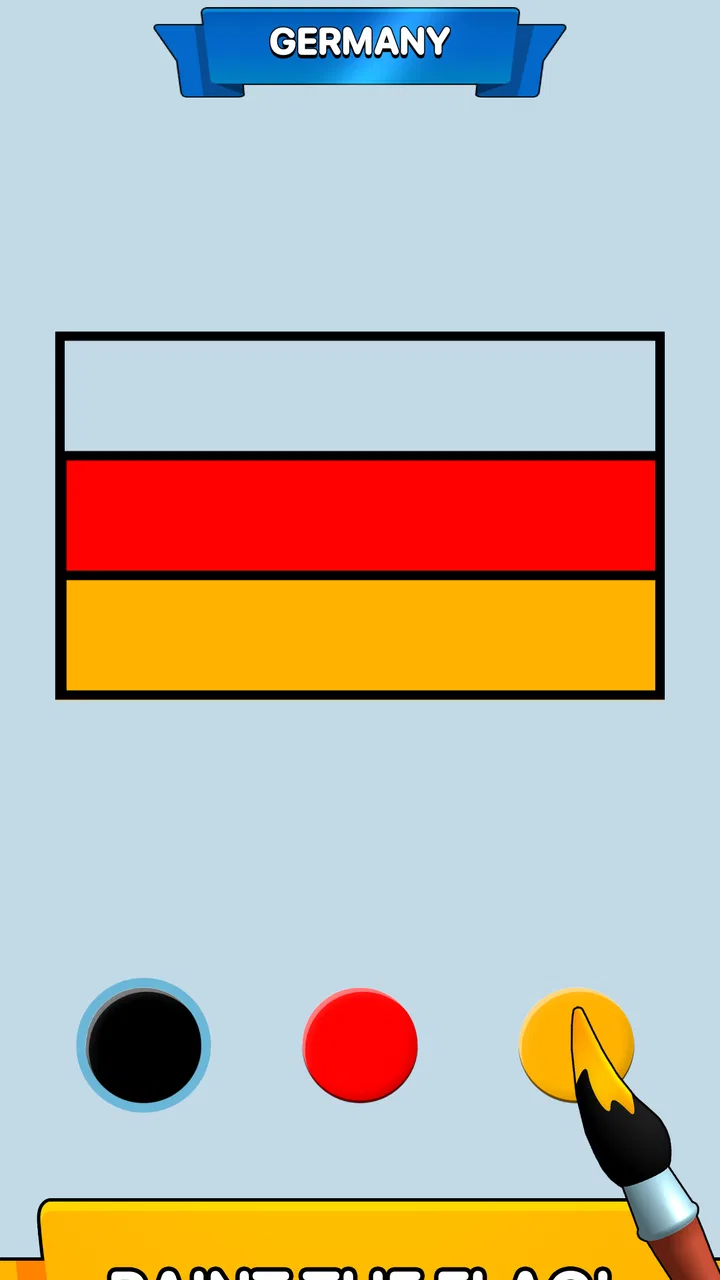
Paint the Flag is the kind of trivia game I can open without preparing myself for a long session. Its central idea is simple: look at a flag and paint it with the right colors. That sounds easy at first, but the challenge quickly becomes a test of memory, visual recognition, and careful attention to small details. I found it especially comfortable for short breaks because each round gives me a clear task instead of asking me to learn a complicated control system.
What makes it worth trying is the combination of a familiar subject and a hands-on answer method. Rather than only choosing a country from a list, I have to think about where each color belongs and then apply it. That extra action makes mistakes feel more informative. I am not just told that I forgot a flag; I can usually see which part of my mental picture was wrong.
The game is free to download, is suitable for Everyone, and comes from Mobsmile Yazilim Hizmetleri Limited Sirketi. It has built a strong audience, with over five million installs and a 4.6 average from around forty-six thousand ratings. Those figures suggest that the idea is easy for many people to understand, but popularity alone does not make every trivia game a good fit. My experience is that this one works best when you want a focused visual quiz rather than a broad general-knowledge competition.
You May Also Like

 Google Keep - Notes and lists
Google Keep’s Quiet Growth Shows the Appeal of Simpler Notes
As mobile work gets busier, Google Keep keeps winning a simple contest: capture a thought quickly, find it later, and get on with the day.

 Blood Strike: 2.5 Anniversary
Blood Strike’s Loadouts Turn Every Drop Into a Tactical Gamble
A close look at Blood Strike’s custom loadouts: how fast access to signature weapons reshapes its battle royale rhythm, rewards preparation, and narrows the gap between fights.

 Pandora - Music & Podcasts
Pandora’s Music Is Easy to Start, but Harder to Recover
Pandora’s strength is its low-effort path from a seed to a station. Its weak spot is how much confidence it asks you to place in connection, setup, and quiet recovery.

 8 Ball Pool
 Is Built on Rivalries, Rematches, and Routine
A close look at the rivalries, rematches, shared routines, and unanswered safety questions that turn a quick pool match into a persistent mobile community.

 Samsung Music
’s Quiet Strength Is Playing What You Already Own
Its reach comes less from spectacle than from dependable access to a personal library. That simplicity is both the app’s strongest retention engine and its ceiling.

 AccuWeather: Weather Radar
AccuWeather Review: A Quick, Clear Forecast for Everyday Decisions
For everyday plans, the best forecast is the one you can understand quickly. AccuWeather makes rain timing, radar, and local conditions easy to act on, with a few trade-offs.
More From Our News Desk



What to expect when you start
The first thing I noticed is how quickly the game communicates its purpose. There is no need to study a manual before trying a round. The screen presents a flag-related task, and the goal is to use the available colors correctly. That immediate clarity is a real advantage for first-time players, children, and anyone who usually abandons trivia games when the opening menus feel too busy.
I would describe the pace as deliberately simple rather than frantic. The appeal comes from recognizing a pattern, recalling a country, and making the correct visual choice. It is a different rhythm from trivia apps that fire several text questions at me and reward fast tapping. Here, I get more value from looking closely than from rushing.
That distinction matters when choosing between this game and a conventional quiz. If you enjoy questions about history, science, entertainment, or current events, Paint the Flag is narrower. It concentrates on national flags, so its challenge is visual and geographic. On the other hand, if ordinary multiple-choice quizzes feel repetitive, the coloring interaction gives the subject a more tangible quality.
I also found the format suitable for sharing a device with someone else. A parent can let a child attempt a flag, then discuss the country and its colors without turning the session into a formal lesson. Friends can take turns guessing, although the game is more naturally a personal practice tool than a full multiplayer experience. Its strongest social use is comparing what each person remembers and explaining why a particular answer is correct.
The game runs on Android devices using at least Android 7.0. Its current version is 2.7.3, so a compatible phone or tablet should be enough to begin. I would still recommend checking that the device has a comfortable screen size, because the experience depends on seeing colored areas clearly. A very small display can make a simple coloring task feel less precise than it should.
Getting through the first setup
Starting is uncomplicated: install the free game, open it, and move toward the first flag challenge. I appreciate that the basic premise does not require a paid commitment before I can decide whether it suits me. For a casual title, that is important. I can test the interaction during a spare minute instead of making a purchase based only on a short description.
The game includes in-app purchases priced from $4.99 to $19.99 per item. I treat those as optional spending rather than part of the basic entry point. My advice is to play enough free content to understand your own habits first. If you are only looking for occasional brain exercise, there is little reason to decide about purchases immediately. If you become invested in progressing, consider whether the convenience is genuinely improving your sessions rather than simply helping you move past a difficult flag.
Because the subject is visual, I would begin with the screen brightness at a comfortable level and avoid playing in a place where reflections hide subtle colors. This is not a special setting inside the game; it is simply a practical adjustment that helps prevent an avoidable mistake. When two shades look similar, the problem may be the display environment rather than your memory.
I also recommend resisting the urge to search for every answer at once. The most useful part of this game is the short pause between seeing a flag and committing to a color. If I look up everything immediately, I may complete the round, but I lose the memory practice that makes the format worthwhile. A better routine is to make a genuine attempt, use any available help only after thinking, and then repeat the flag later from memory.
How the first successful action feels
My first meaningful success came from slowing down. I looked at the flag structure, identified the colors I recognized, and then treated each section as a separate decision instead of trying to recall the entire image in one flash. That approach is more reliable than guessing the country name and assuming the rest will follow automatically.
The coloring action gives the answer a satisfying sense of completion. A correct choice is not merely a selected button; it produces a finished visual result. That makes the game approachable for people who learn better through images than through written facts. It also gives younger players a clear cause-and-effect loop: recognize, choose, fill, and check.
One useful technique is to remember a flag by its layout before remembering its colors. I first ask myself whether the design is divided into horizontal bands, vertical bands, a cross, a central emblem, or another distinctive arrangement. Then I attach the colors to those positions. This two-step method reduces confusion between flags that share a palette but use it differently.
Another practical tip is to say the country name quietly after completing a round. That connects the visual design with a geographic label and makes the result easier to recall later. I would not turn every session into a study exercise, but doing this occasionally transforms a casual game into a modest geography habit.
The first success is also a good moment to decide whether you enjoy the game’s central demand. Some players like recognizing a familiar flag but dislike filling it section by section. Others prefer the extra interaction because it makes the answer feel earned. If the coloring step feels like unnecessary work to you, a standard country quiz may be a better alternative.
Where new players can become confused
The biggest source of confusion is assuming that a familiar color combination guarantees a correct answer. Many flags use red, white, blue, green, or yellow, so recognizing the palette is not enough. I have had better results by checking the order, direction, and position of the colors before acting. A small structural clue can matter more than the overall impression.
Emblems and symbols can create another problem. When a design includes a central mark, it is tempting to focus on the symbol and overlook the surrounding field. I handle these flags by identifying the background first, then the bands or shapes around it, and only afterward considering the central detail. This keeps one complicated feature from making the entire flag seem unfamiliar.
Players may also wonder whether they should tap quickly or take their time. I do not think speed is the main reason to play this title. Accuracy and recognition are more valuable, especially during the first sessions. Rushing encourages me to choose a color based on a vague memory, while a short inspection often reveals the right arrangement. The game is more enjoyable when I treat each round as a visual puzzle rather than a reflex test.
Another question is whether the game is appropriate for children. The Everyone rating makes it accessible from an age-classification perspective, and the subject can support informal geography learning. Still, I would play alongside a younger child at first. The game may show a flag without explaining the historical or cultural background behind it, so a parent or teacher can add context and turn a correct answer into a more meaningful conversation.
It is also worth understanding what this game cannot replace. It is not a complete geography course, and I would not use it as my only way to learn countries. Flags can introduce a place, but they do not explain its location, language, history, or people. For deeper learning, I would pair a session with a map or a reliable reference source. The game is strongest as a memory prompt and a starting point, not as a full encyclopedia.
Compared with traditional flashcards, the interactive coloring is more engaging, but flashcards may be better for systematic revision. I can organize flashcards by continent or difficulty and review specific mistakes. Paint the Flag feels more spontaneous and less academic. Compared with broad trivia apps, it offers less subject variety but gives more visual involvement. The right choice depends on whether you want focused repetition or a rotating stream of unrelated questions.
Making progress without turning it into a chore
I get the most from short, regular sessions. A few rounds during a commute, a waiting room, or a break can reinforce recognition without making the activity feel like homework. When I encounter a difficult flag, I try to remember one distinctive feature rather than memorizing every detail at once. For example, I might focus on the unusual arrangement of bands or the position of a strong contrasting color.
A useful personal system is to keep a mental list of “almost known” flags. These are the ones I recognize as belonging to a certain group but cannot place confidently. I revisit them later and compare their layouts instead of treating each mistake as an isolated failure. This is where the game becomes more than a quick distraction: it helps expose the exact boundary of what I remember.
I would also avoid using hints or paid assistance automatically. Help can keep a session moving, but struggling briefly is often where learning happens. If you do choose an in-app purchase, I would set a limit before playing and judge it by whether it improves enjoyment over time. The free starting point is sufficient for evaluating the core mechanic, while optional spending should remain a conscious choice.
Battery and attention are practical considerations too. Since the rounds are compact, the game is easy to close between challenges, which suits casual use. However, the visual concentration can become tiring if I keep playing after I stop noticing the flag structure. When that happens, I take a break rather than forcing more guesses. A fresh look is usually more useful than repeated careless attempts.
The developer’s focus on a single clear concept is both a strength and a limitation. The strength is that I always know what kind of challenge I am opening. The limitation is that players who need changing trivia subjects may eventually want more variety than national flags can provide. I would recommend it to someone who enjoys geography-based recognition, but I would steer a general quiz fan toward a broader app if novelty across many topics is the priority.
Who should try it and who should skip it
I think Paint the Flag is a good match for casual learners, families, geography beginners, and players who prefer visual puzzles to long written questions. It is also useful for someone who wants a low-pressure way to refresh flag recognition. The controls are easy to understand, the free entry point lowers the risk of trying it, and the coloring format gives each answer a clear visual payoff.
I would be more cautious about recommending it to competitive quiz players who want detailed score systems, broad categories, or fast head-to-head play. Its appeal is concentrated in the act of reconstructing flags. If you need a deep progression structure or a constantly changing knowledge base, another trivia game may hold your attention longer.
It may also be a poor fit if you have difficulty distinguishing colors or if your device displays shades poorly. The game’s central task depends on accurate visual selection, so accessibility needs should be considered before committing to long sessions. A larger screen and good display conditions can help, but they cannot change whether the color-based mechanic is comfortable for you.
For a first-time user, my suggested path is simple: install the free version, complete several rounds without looking up answers, notice whether the coloring interaction feels satisfying, and then decide whether you want to continue. Focus on layout first, colors second, and country name third. That order makes the early learning curve gentler and gives you a repeatable method when a flag looks familiar but refuses to come to mind.
After that, use the game in a realistic routine rather than forcing a long session. I might play while waiting for an appointment, then later revisit the flags that caused hesitation. A child might play with a parent and use each answer as the start of a short map conversation. A traveler could use it as a light way to recognize national symbols before visiting different countries. These uses work because the game’s task is small enough to fit around everyday life.
Paint the Flag was released on May 5, 2023, and its current version is 2.7.3. Those details are useful when checking compatibility and deciding whether the installed copy is up to date, but they do not determine whether you will enjoy it. The real question is whether you like learning through visual repetition and a hands-on answer.
My final view is positive, with a clear qualification: this is a focused flag-recognition game, not a complete trivia platform. I like its immediate premise, its approachable coloring action, and the way a wrong answer can reveal a specific memory gap. I would recommend trying it if you want a free, family-friendly geography diversion that can become a small learning routine. I would skip it only if you need broad trivia variety, extensive competitive features, or a challenge unrelated to visual color and layout.
For me, the best next step after installing Paint the Flag is not to chase every available round as quickly as possible. I would play slowly, remember the structure of each difficult flag, and return later to see whether the image has stayed with me. That turns a simple coloring quiz into something more useful: a compact way to build recognition one flag at a time.
FAQs for Paint the Flag
01What is Paint the Flag, and how does it work?
Paint the Flag is an engaging mobile game that challenges players to recreate national flags using a variety of colors and tools. The game provides a blank canvas and a set of colors, and players must match the flag as accurately as possible. It's an educational yet entertaining way to learn about different countries and their flags.
02Is Paint the Flag suitable for all age groups?
Yes, Paint the Flag is designed to be accessible and enjoyable for all age groups. The game’s intuitive interface and simple mechanics make it easy for younger players to understand, while the challenge of accurately painting flags offers enough complexity for older players to enjoy. It’s a great way for families to learn and play together.
03Does Paint the Flag require an internet connection?
Paint the Flag can be played offline, making it perfect for travel or situations where internet access is limited. However, connecting to the internet may be necessary for certain features, like downloading new flag packs or participating in online leaderboards and competitions, which help enhance the overall experience.
04Are there in-app purchases in Paint the Flag?
Yes, Paint the Flag offers in-app purchases. Players can buy additional color packs, tools, or hints to help them complete flags more efficiently. While these purchases can enhance gameplay, they are entirely optional, and players can enjoy the full core experience without spending money.
05How does Paint the Flag handle user data and privacy?
Paint the Flag takes user privacy seriously. The app collects minimal data necessary for gameplay, such as progress tracking and leaderboard statistics. It adheres to strict privacy policies and complies with relevant regulations to ensure that user data is protected. Players can review the privacy policy within the app for detailed information.
Pros
- User-friendly interface for easy navigation.
- Wide variety of flags to choose from.
- Educational content boosts geography knowledge.
- Creative tools enhance artistic skills.
- Offline mode available for uninterrupted play.
Cons
- Limited custom flag creation options.
- Ads can interrupt the painting process.
- Some flags lack detailed information.
- Occasional lag on older devices.
- In-app purchases for premium features.

Paint the Flag
Gallery